Beyond the Prompt: Why Original Murals Require a Human Process
Can AI design a Mural? Sure, but here's what it'll be missing. Below is a case study showing the difference between a client’s AI prompt and a final design. Read on to see point-by-point how I improved upon the initial concept.
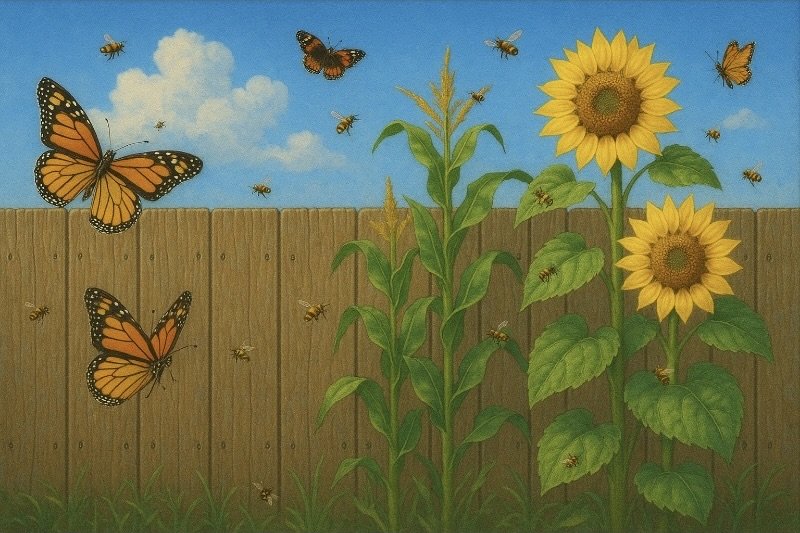
First, I want to be clear: this client did nothing wrong. The AI prompt was an effective way to communicate the overall vision for the mural. It quickly showed me the themes they were drawn to: large sunflowers, monarch butterflies, corn, bees, and a blue sky.
The only challenge comes when a client becomes attached to a generated image and expects me to copy it. Fortunately, this client understood my concerns and trusted me to develop an original design inspired by the concepts they liked rather than reproducing the AI image. I would still rather design my ideas from scratch, but I accept that we are in a new era of design technology. Rather than fighting against AI, let me simply explain how the human-made design still wins out.
From AI Prompt to Site-Specific Design to Mural
Here are some of the design decisions that led me in a different direction:
1. The artwork should be specific and accurate
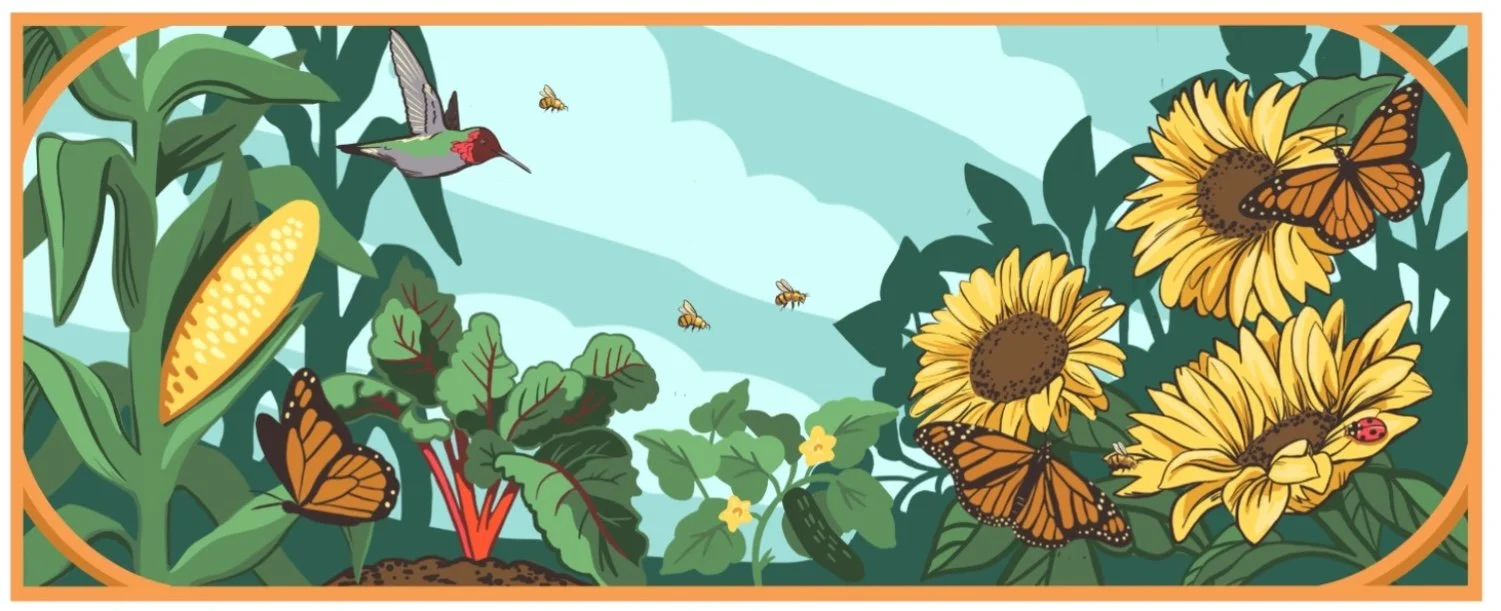
Rather than using AI-generated flowers and insects, I used photographs and reference material of the actual plants grown in the community garden. This creates artwork that is not only botanically accurate but unique to this location. The mural becomes a reflection of the garden itself instead of a generic collection of flowers.
2. The right dimensions
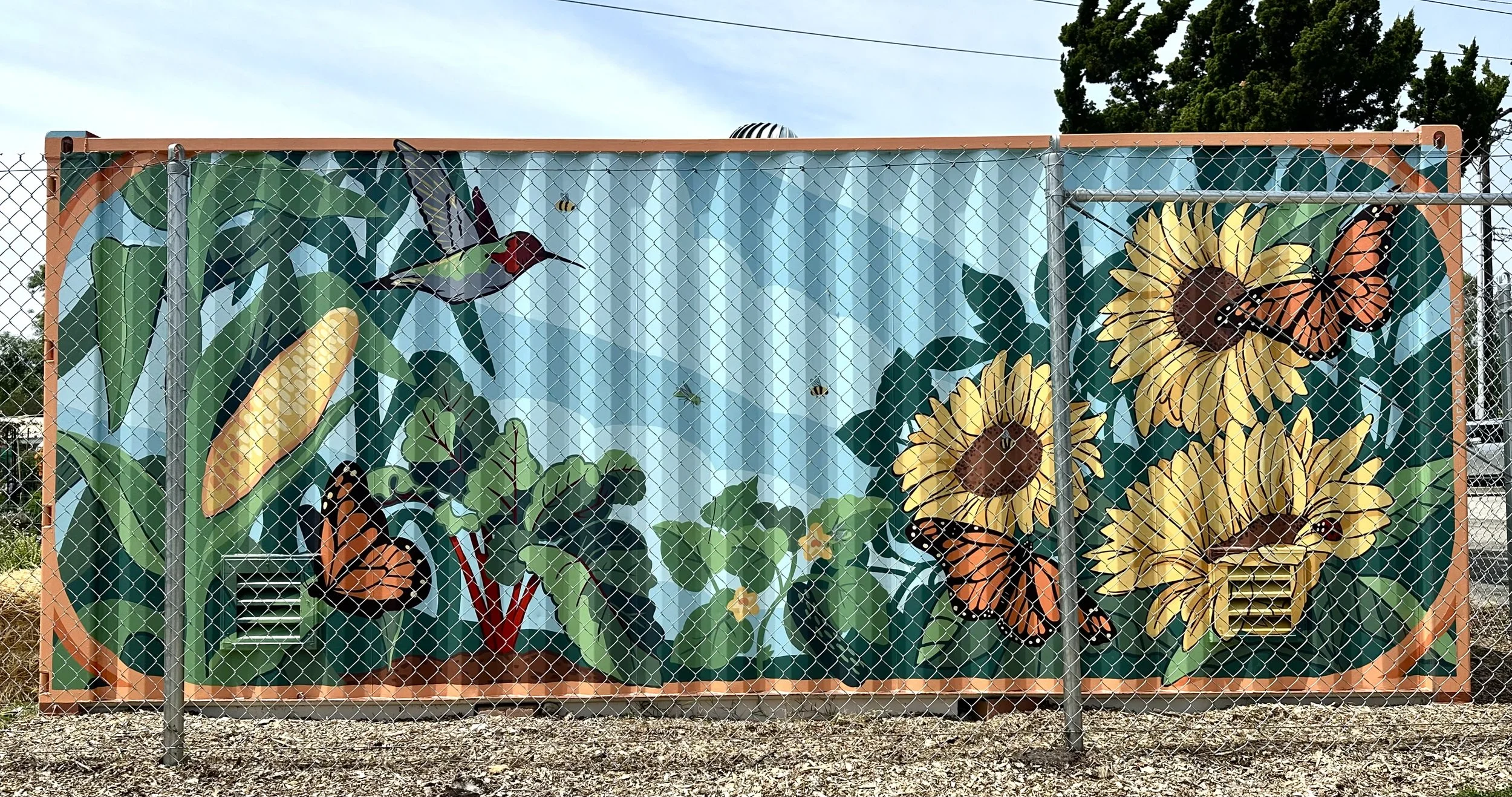
You can see that the prompt was not the actual size of the wall. I take rigorous measurements and take note to incorporate any wall obstructions like outlets, fire alarms, pipes etc. My artwork is created specifically for the dimensions of the wall.
3. The wall surface matters
The mural is painted on corrugated metal, which creates an accordion-like surface. Straight horizontal and vertical lines become visually distorted by the ridges. In the AI image, the fence is a dominant design element, but on this surface it would appear wavy and distracting.
4. Scale
Most viewers experience this mural from passing cars on the street. In addition, a chain-link fence sits in front of the wall. Small flowers, insects, and intricate details would disappear behind the fence and at that viewing distance. I enlarged the primary elements so the mural reads clearly from across the street while still rewarding viewers who stop to look more closely.
5. A fence behind a fence
Because the mural already sits behind an actual chain-link fence, depicting another fence within the artwork felt visually redundant. It also made the composition feel heavier than necessary. From both a compositional and color standpoint, I wanted the focal point to be vibrant plants and pollinators rather than a large brown fence.
6. Creating Depth The AI concept is flat and static. It places objects in the same visual plane against a fence. In my design, overlapping foliage, changes in scale, and layered silhouettes create a sense of depth that invites your eye to travel across the mural and creates a feeling of movement.
7. Style
The AI-generated imagery leaned toward a cartoony aesthetic, with generic stylized sunflowers and butterflies. My final design uses an illustrative approach that feels handcrafted while still drawing from real plants and wildlife. It strikes a balance between artistic interpretation and natural observation.
This case study is intentionally focused on design rather than the broader debate around AI, which would take several blog posts just to get into. While there are important ethical and environmental questions surrounding generative imagery, my goal here is simply to show the benefits of a thoughtful, site-specific design process. Great murals aren’t generated with one click, they are the product of a conversation between people and place.